
Last Updated: November 22, 2026
Quick Summary
Mindfulness tools for neurodivergent workspaces are worth it when they fit the nervous system doing the practice, not when they force still meditation. Adaptable options like mindful movement, music-based mindfulness, sensory grounding, and short practice built around a special interest work best. A tool is not the practice; it is the cue that makes the practice happen.
- A 2024 systematic review found mindfulness-based interventions reduced psychological distress and behavioral problems in autistic adults.
- Start with micro-mindfulness of 60 to 90 seconds rather than 20-minute sessions.
- Pair each focus exercise with a physical object so it becomes a habit with a trigger.
- Noise-cancelling headphones reduce auditory load but also block needed conversation.
- The Current Capacity battery magnet uses a movable indicator on a red, yellow, green scale.
Table of Contents
- Mindfulness Tools for Neurodivergent Workspaces: What Actually Helps
- Mindfulness Tools for Neurodivergent Workspaces Free: What You Already Own
- Mindfulness Exercises for Focus at Work That Pair With a Physical Tool
- Frequently Asked Questions
Mindfulness Tools for Neurodivergent Workspaces: What Actually Helps
A 2024 systematic review of mindfulness-based interventions for autistic adults reported reduced psychological distress and behavioral problems, along with improved cognitive and social outcomes (review of mindfulness interventions for autism spectrum disorder(https://pmc.ncbi.nlm.nih.gov/articles/PMC11506216/)). That matters for anyone building mindfulness tools for neurodivergent workspaces: the practice works, but only when it fits the nervous system doing it.
At FoundWordsCo, we make small physical objects for exactly this reason. Still meditation does not land for everyone mid-task or in a busy room; adaptable options can help, mindful movement, music-based mindfulness, sensory grounding, and short practice built around a special interest. A tool is not the practice; it is the cue that makes the practice happen at 2pm on a Wednesday.
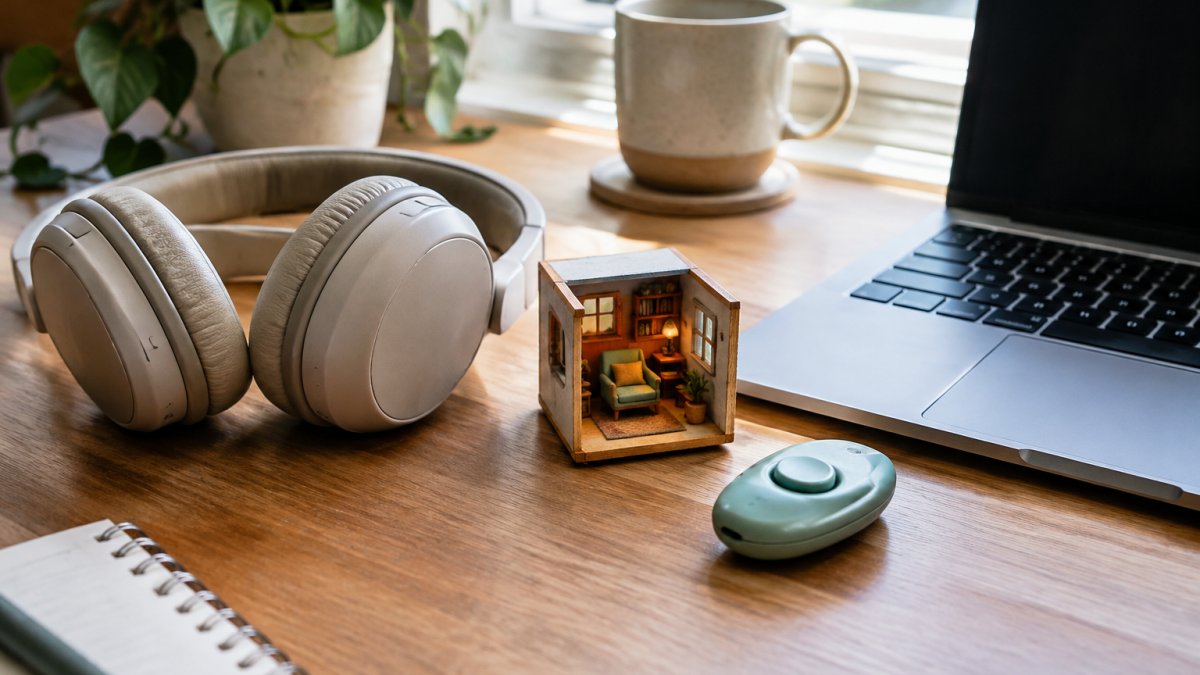
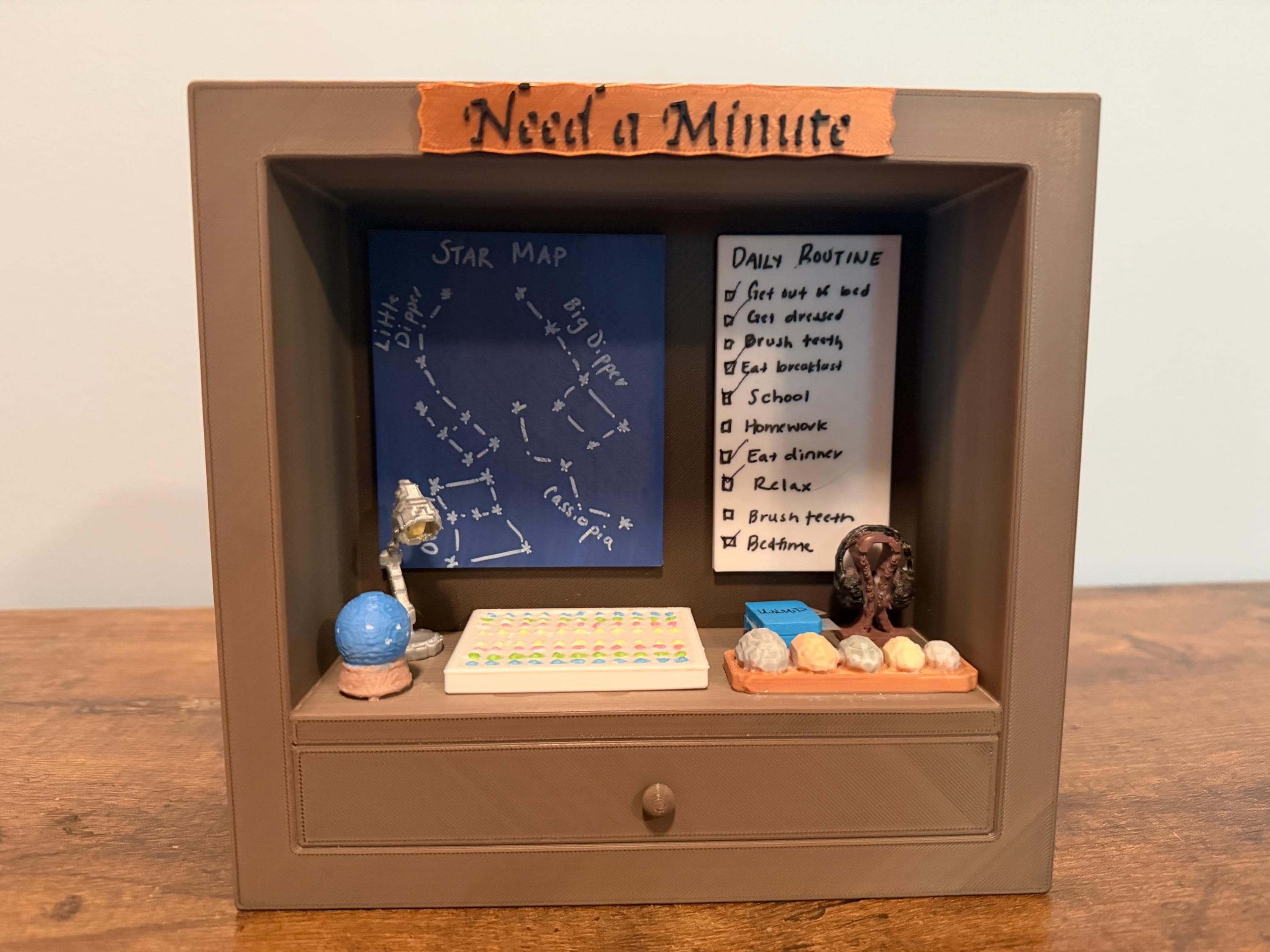
Sensory grounding tools can help on the input side: noise-cancelling headphones reduce auditory load, a weighted lap pad adds deep pressure, and fidgets give restless hands somewhere to go. Visual focus pieces work on the cue side, something on the desk that means "pause here" can serve as a reminder; our Need a Minute miniature room bundles headphones, a routine, and sensory objects into one small scene. Energy and capacity signals can support communication: the Current Capacity battery magnet has a movable indicator on a red, yellow, green scale.
| Tool type | Sensory need it addresses | Best for | Trade-off |
|---|---|---|---|
| Noise-cancelling headphones | Auditory overload | Open offices, shared rooms | Blocks needed conversation too |
| Weighted blanket or lap pad | Deep pressure, regulation | Break-room reset | Not portable, draws attention |
| Clicky fidget | Restless hands, attention drift | Desk work, meetings | Sound can irritate nearby colleagues |
Mindfulness Tools for Neurodivergent Workspaces Free: What You Already Own
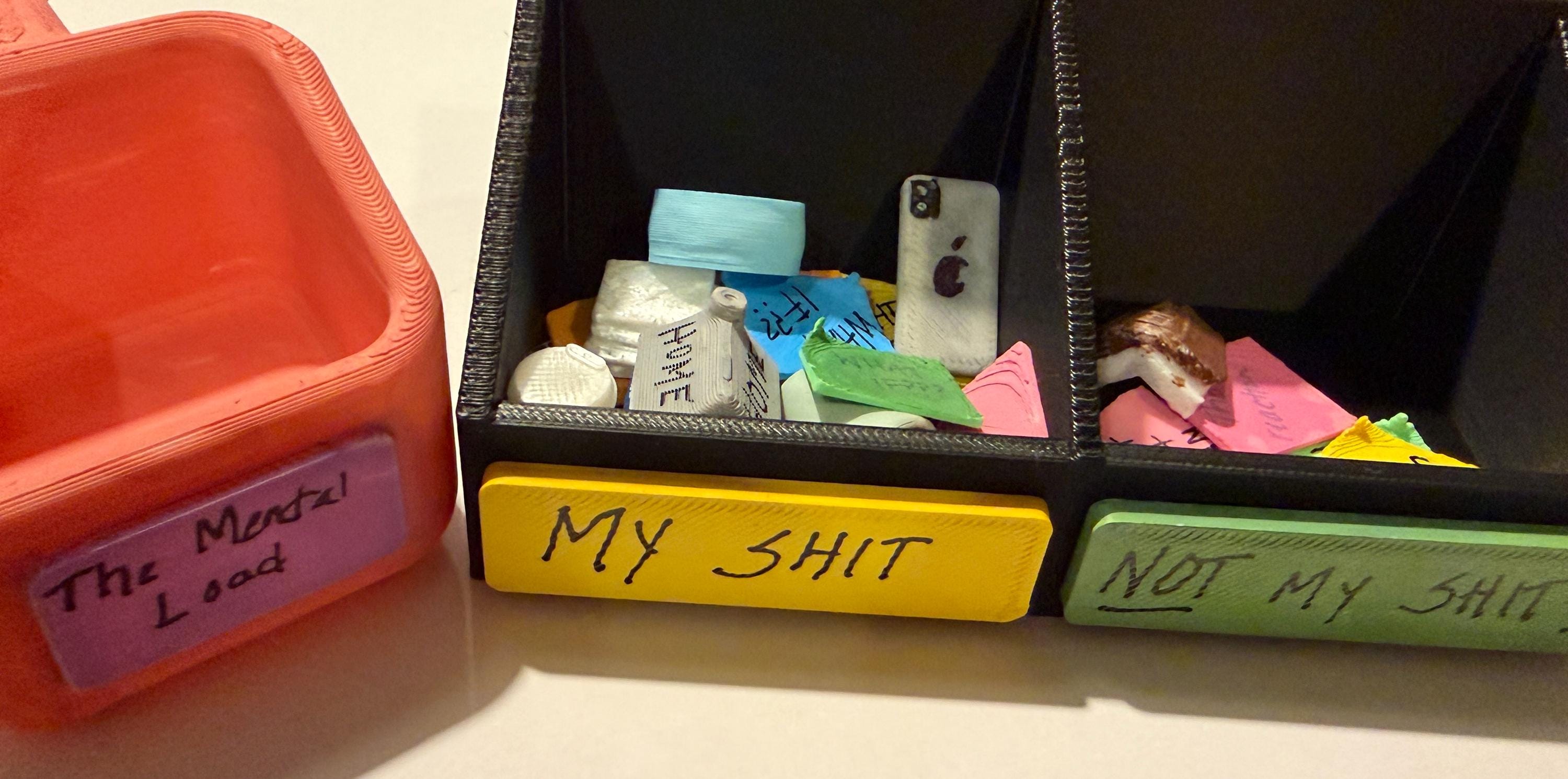
A useful free toolkit may already be on your desk: headphones, a timer, a glass of water, and one object you can pick up and put down. Start with micro-mindfulness: 60 to 90 seconds, not 20 minutes, try three rounds of noticing one sound, one physical sensation, and one thing you can see. The Things I Can Control desk sorter puts that exercise into a physical form: pick a note, decide whether it belongs to you or someone else, place it.
Mindfulness Exercises for Focus at Work That Pair With a Physical Tool
Focus exercises fail when they live only in your head. Pair each one with a physical object and it becomes a habit with a trigger.
1. The 90-second reset. Pick up your cue object, hold it, take three slow breaths, set it down. The object marks the start and end so the exercise has edges.
2. The tab press. When you notice yourself cycling through the same three thoughts, press a physical key for each one. Our 47 Tabs Open desk fidget has six clicky keys, one for each tab that refuses to close.
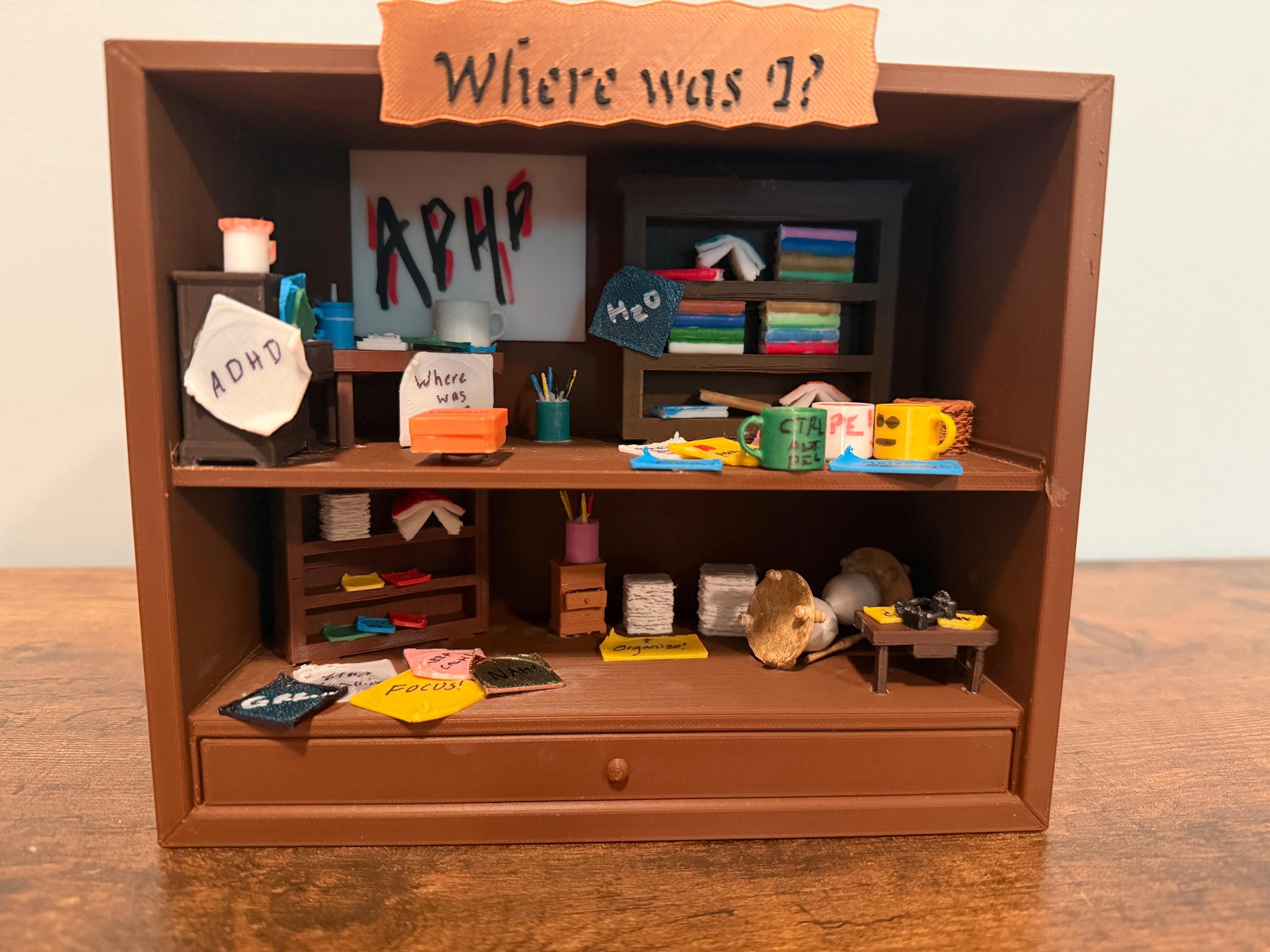
3. The return anchor. For executive dysfunction, the hard part is coming back, not starting. Place one object where you left off; when you see it, you return. The Where Was I? miniature room is a visual reminder of that idea.
4. Music-based focus. One track, no lyrics, on repeat. The repetition becomes an auditory cue that focus time has started.
5. Sensory scan. Name three things you can hear, two you can feel, one you can see. Doing it with your hands on a textured object can help it stick.
The real challenge is not finding a technique. It is building a workspace where the cue is visible, the practice takes under two minutes, and nobody has to explain themselves to a colleague. FoundWordsCo makes handmade miniature art and interactive desk decor that turn abstract emotional states into something you can see and touch: symbolic pieces for burnout, anxiety, and neurodivergence, hand-painted and assembled in small batches. Browse the collections, pick the one that says what you have not been able to say out loud, and put it where you will actually look at it.
Frequently Asked Questions
What mindfulness tools can help neurodivergent people at work?
The tools that help most are the ones that match a specific sensory need. Noise-cancelling headphones cut auditory overload, a clicky fidget like the 47 Tabs Open desk fidget ($29.50) gives restless hands somewhere to go, and a small visual anchor such as a hand-painted miniature room can pull attention back during a hard moment. Start with one tool tied to your biggest distraction, not a full desk overhaul.
How can I make my workspace more sensory-friendly?
Change one input at a time. For sound, try headphones or a quiet breakout space. For touch, keep a weighted blanket or fidget object within reach. For sight, clear the desk down to a few items and give yourself one thing worth looking at, such as the Need a Minute miniature room ($87.50) with its star map and headphones. Test each change for a week before adding the next.
Do free mindfulness tools for neurodivergent workspaces actually work?
Yes, and they are the right place to start. A pair of headphones, a timer, a glass of water, and a two-minute breathing exercise cost nothing and cover most of what a paid tool does. A physical object on your desk, like the Therapy Check-In slider ($32.40), works as a reminder as much as a tool. Build the free habits first, then add a desk piece that keeps the practice visible.
